4.11.2012

Firedome plus chimney - the challenge continues

See critical updates below:

Tonight I did a practice run with my Firedome this time with a chimney (water heater exhaust pipe) sitting over the top vent.  Pretty huge difference.  Fast to heat, and fast to ignite new wood.  Here's the temp data for the quick burn.

click on graph to see it enlarged
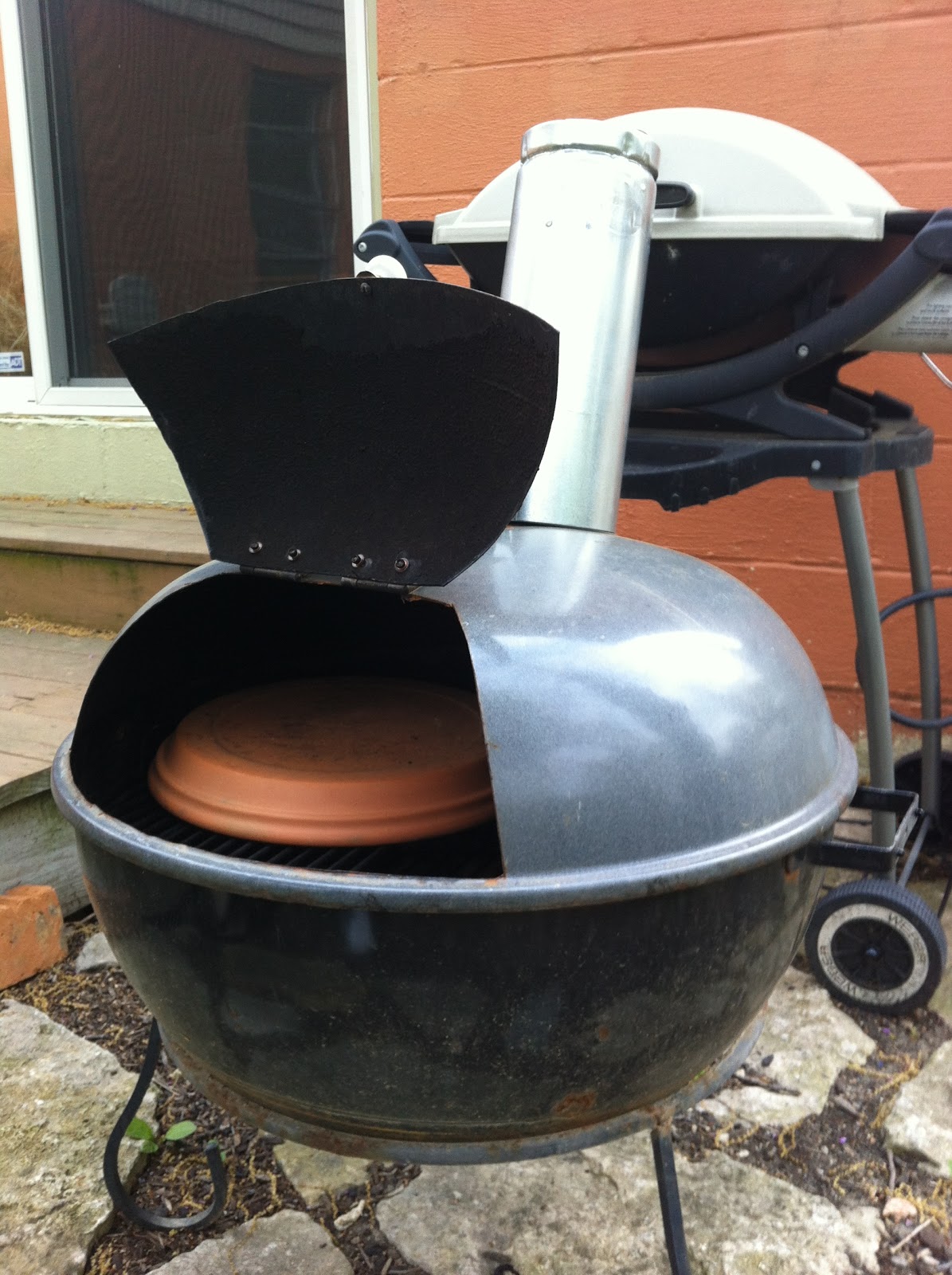
chimney mounted on top of vent
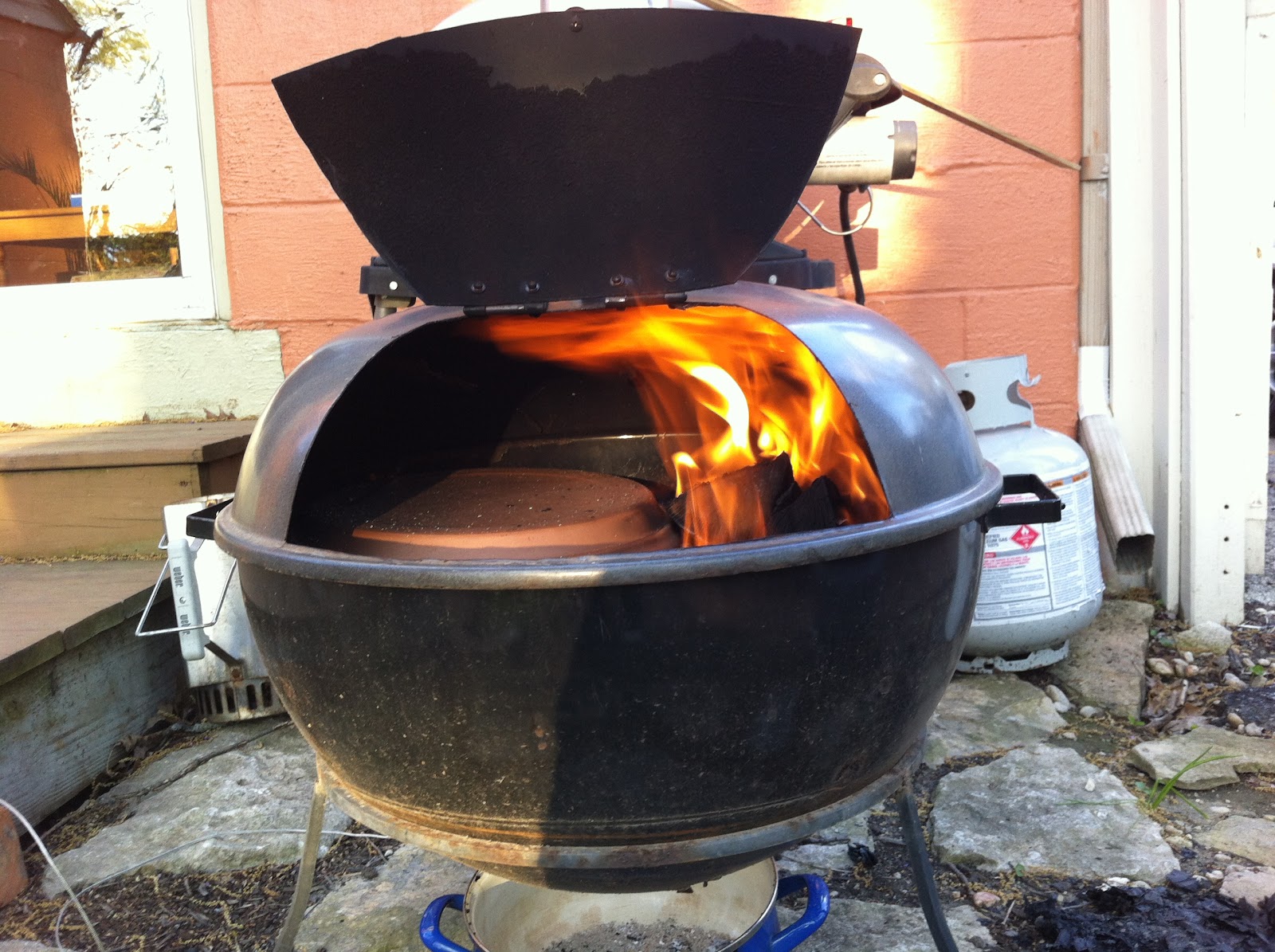

Update for the follower of this site
Jon in Albany demands details.  As a faithful reader, I am obliged to give more details, but thought I'd extend the post by answering here instead of in the comments.

The biggest problem with this thing has been the vigor of the flame.  Most of the time it's like a plasma furnace, but other times the fire burns like a girl scout fire, barely sending the inside past 500F.  The chimney, on this single run, seemed to take the fire and give it some updraft and a really good burn.  Still more testing to be done.

Fuel:  I start the fuel on the lower grate using just about 20 match light briquettes.  Once those are lit, it's all oak.  I use ca. 8" seasoned oak from year's past tree trims.  I split the logs, age tem about a year and  cut to a size that will fit beside the stone.  Half of the top grate has been removed to allow space to toss in wood.

The chimney is a piece of 4" dia. x 8" tall stainless pipe that just rests on top of the dome's top vent when open.  I also want to note I build the fire so it's offset from the cook surface.  The clay surface is on one side of the center volume and the flame is on the other.  This looked most like the configuration in pizza oven's I've seen.  So, that's it.  More testing and reporting to be done.  Stay tuned.

Update for 20-April-2012
This site is a fun way to share discoveries, mostly good.  But today, I hang my head in shame.  The furnace-like temps I got initially could not be duplicated twice since then.  

The Firedome project has been fun and addictive.  It lacks reproducibility regarding temperature.  For such a simple device, it's intriguing.  I live for this kind of problem.  At this point in the game, pizza is not about the dough recipe or the toppings, temperature is an ingredient.  The same dough topped in a 600 deg F oven is profoundly different than the same pie cooked at 900+ deg F.  Based on the last couple runs,  I don't think it's the chimney that launched the plasma beam initially discussed.  The current hypothesis is something suggested by my wife, moisture in the wood. 

Moisture content in wood is a great candidate because, to now, I've not checked it.  I started this project with briquettes.  Once those ash over, the heat drops considerably and  I began using oak or whatever the hell fell from my trees.  Using such a source is bound to be filled with all kinds of differences.  I still want to use wood because it burns hot and has low ash.  I ordered an inexpensive moisture meter for wood and will be scouting the city testing various lots of wood.  The measurement is non destructive and hopefully no supermarket managers will mind (if they catch me).  I will of course keep you all updated.

3.31.2012

spent grain bread

Recent activities here at the ranch have conspired to yield me a bunch of unused grain.  Malted barley and rye are particularly abundant.  Here's a way to use a little of the extra (stored in the freezer, it ferments fast!).

water, 300 g
veg oil, 10 g
sugar, 10 g
yeast, Fleischmann's fast, pkt
unbleached white, Montana Sapphire 220 g
whole wheat, Stutzmann Farms, 50 g
hydrated spent grain, barley/rye 30 g
sunflower seeds, roasted 30 g
rolled oats, 30 g
flax seed, 30 g

Straight dough method, divided dough in two pieces, shaped and proofed as boules, baked 400F for about 40 minutes.

3.29.2012

Merguez and chickpea stew


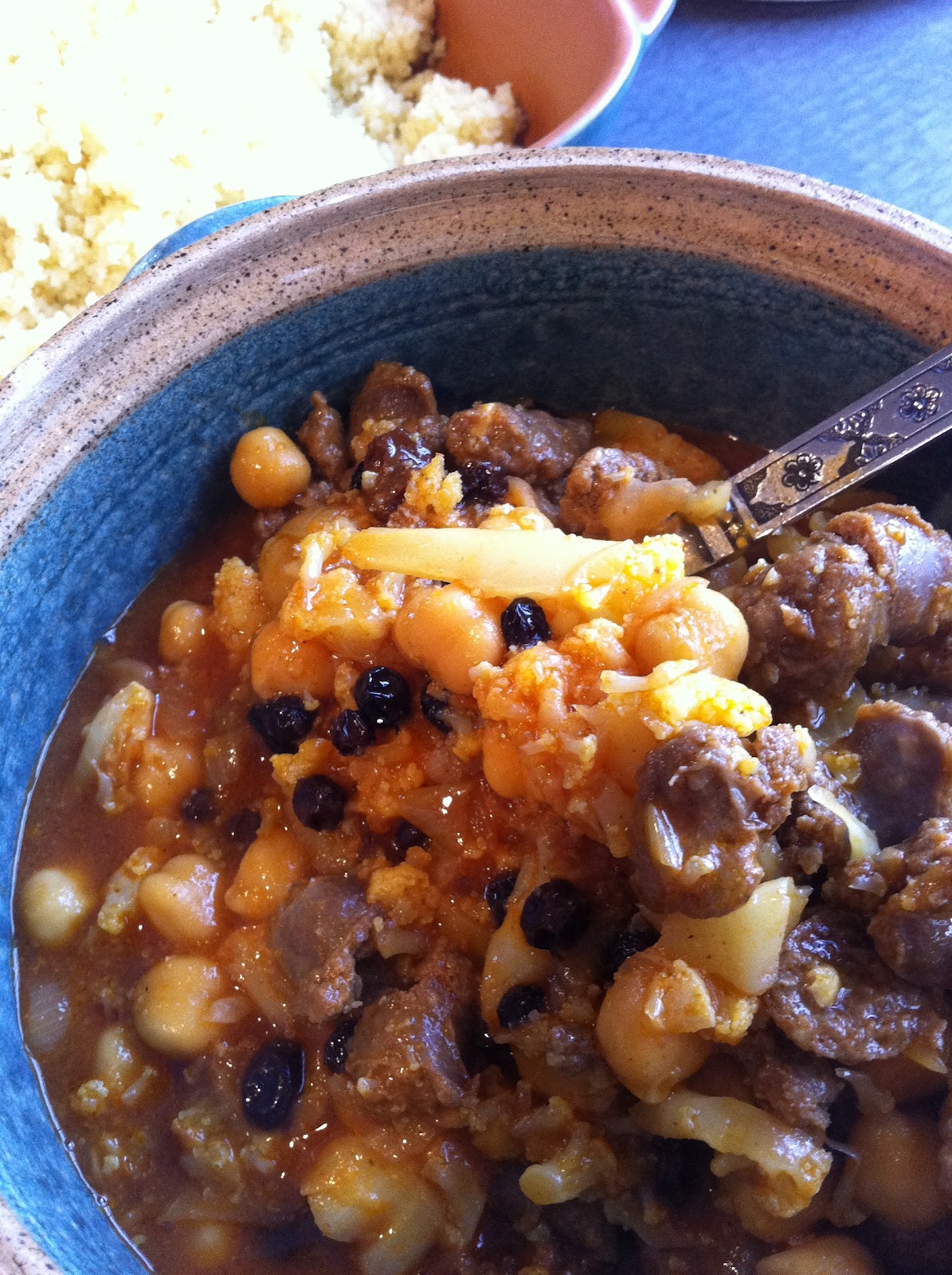
I don't usually post what I ate last night, but I don't want to forget this one.  I took a bunch of merguez out of the casing, sauteed it slowly to render the fat.  Then I removed the meat from the pan.  To the wonderfully spiced fat, I added a little more olive oil, a bunch of slivered onion and cauliflower, some stock, tomato paste and braised until the cauliflower was tender.  I then added a can of chickpeas and about a cup of currants and then added the meat back in.  The entire mixture was then simmered gently until dinner, about an hour.  Really, really good, a keeper.


I like sausage a lot! When it becomes part of a dish like this, the seasoning is completely provided by the meat.  I dislike stuffing immensely, so I'll probably start making it more often and keep it in bulk.

Re: Merguez availability
Around Columbus: Mediterranean Food Imports has merguez, it's adequate, not great.  I asked Whole Foods if they had it and they said to ask ahead and they'd make it, but I never followed up.  My advice would be to find a lamb shoulder, grind it and make your own.  After you hunt down a lamb shoulder, the rest of the ingredients are easy to find.

3.23.2012

meyer lemon marmalade

I usually don't write up this kind of stuff, but I like this formula and don't want to forget. I saw some meyer lemons the other day and couldn't believe how soft their skin was, I grabbed a couple. I chopped them up removing only the central-most membrane and white stuff. The rest, skin, pith and all was finely diced (I chopped up 2 lemons). The lemons (128 g), sugar (128 g) and about 500-700 mL water placed in a sauce pan to barely simmer until it glopped like a lava swamp (about 2 hours). Then I poured it in a jar. It's pretty  awesome.

So equal weight sugar and citrus (I've done an orange before using this as well) and enough water, replenishing if necessary, to allow a 2-3 hour gradual simmer/concentration and marmalade.

3.18.2012

Basic Foods: Authority Posts

Too often I want a quick prep and don't want to read - I just want to cook.  My goto places are: Ruhlman's Ratio, SimplyRecipes.com by Elise, 101CookBooks.com, CookingLight.com and a few others.


Additionally, I decided to tally up my favorite foods and posts for future reference.  The following preps have become part of my family's repertoire of staple foods.  Feel free to suggest more in the comments.  I'll keep adding to this over time (it's a sloppy alphabetic listing).

Bacon Manifesto by Andrew, a well-read and adventurous chef 
Cauliflower roasted with Israeli couscous 
French Fries by Kenji (haven't been able to reproduce yet, but looks promising)
Greens by @Twixlen 
Pulled Pork on a Weber Grill (instructables sequence) by grillmaster Mike
...

3.10.2012

Cherry Smoked Bacon (or more product placement than Apple in Starbucks)

Warning: This post features oodles of product crap and not one of the product-producing bastards gave me a nickel.

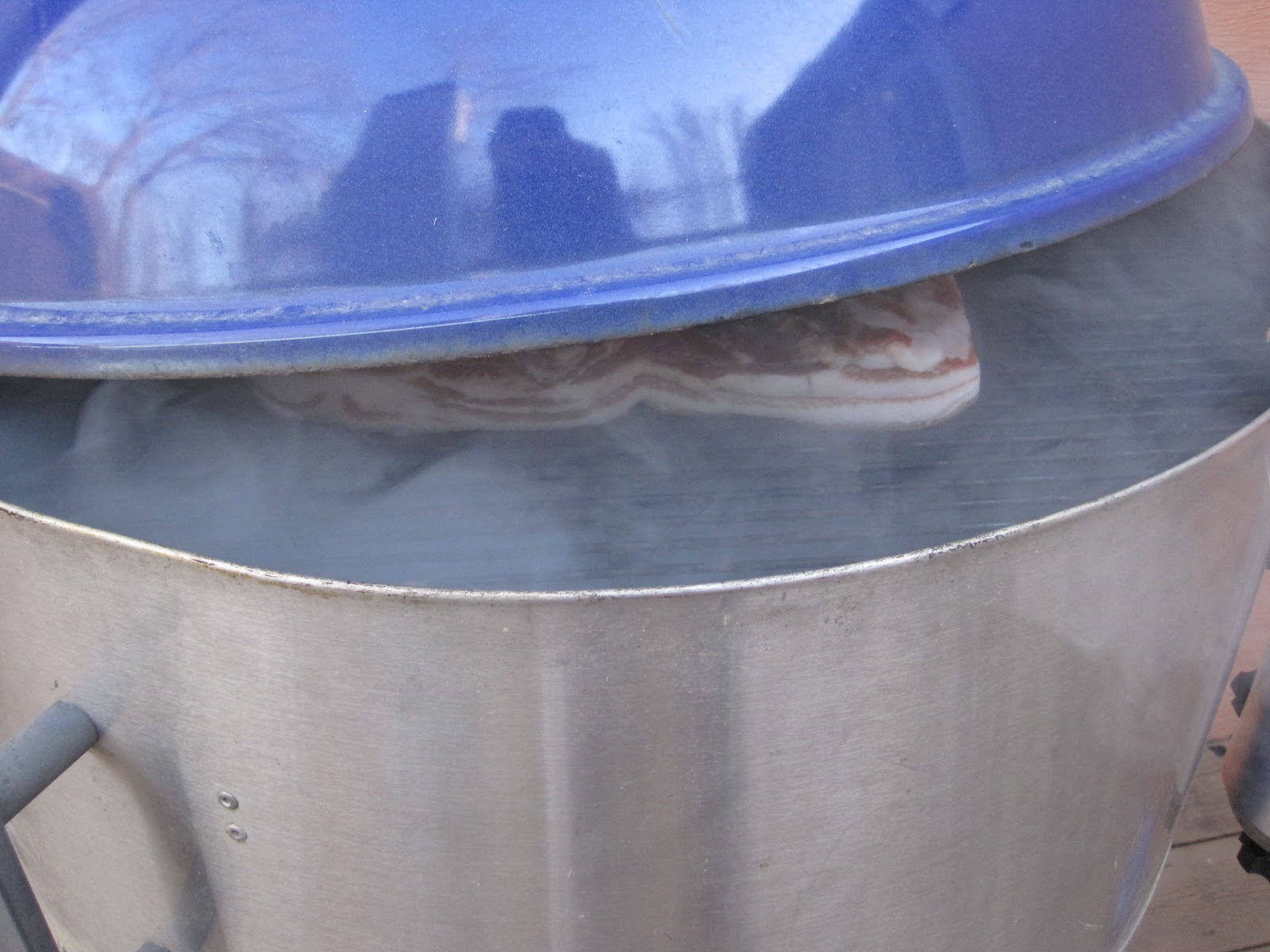
For xmas, the wife gave me a Smoke Daddy smoker offset box. A well-machined bit of aluminum and steel made to fit into a chamber with hand-tight fittings via a 7/8" dia hole. The smoke comes from wood and today I'm using Traeger smoking pellets hoping to get a longer smoking session without having to do more than sip beer and stare at it. I used plain old chips off the shelf, but they burned too quickly. The pellets I got for just under a buck a pound were just what this rig needed.  One charge of 200 grams of pellets goes for 3-4 hours.  The line into this thing (that blue line) is hooked to a small aquarium pump. This is necessary to keep the combustion going, the lit pellets will suffocate without a perk of air. I'll try slowing the flow of air to get a few more hours out of it.

So that's it, see below for a few action shots. I prepped my pork belly according to Saucisson Mac's bacon manifesto and tossed it on.  I especially like Saucisson Mac's thoughts on a solution brine rather than a solid/surface salting, more uniform and faster to get the belly cured.

The stainless steel cylinder that extends my kettle into a pseudo Smoky Mountain isn't sold anymore.  However, the smoke from this thing could be pumped into a wooden box or pretty much any chamber you can drill a hole into, the receiving chamber isn't hot.

I put the pellets in and lit it with a brief zap of a propane torch like the instructions suggested, capped it off and started the aquarium pump.


My pork belly, about 2.5 lbs.  This is where economies of scale scream "MORE BACON."  The brining of a pork belly is easy; that chamber has two racks of space and given how fast I gave away the last batch, I should've made pounds and pounds.  Fear not, you may see xmas gifts that bear some resemblance.

After searching throughout Columbus, I gave up and found my cherry pellets at Amazon (isn't that sad, to get a fuel source from Amazon?)  They are a nicely manufactured product though, perfect for this type of apparatus.


See through the door?  That's me sipping whiskey and strumming my banjo.

fin, tomorrow's breakfast will be special.

2.26.2012

My first batch o bacon!

It's cool to see something that looks (almost) like bacon starting from a pork belly.  It's cool, but it's a little like never having seen macaroni from anything but a blue box. See smoking apparatus used for smoking the pork belly after it brined.

2.25.2012

Teeny weeny offset smoking box to cold smoke bacon. (Smoke Daddy smoker)


Thanks my love (finally used my xmas gift).
This rig was assembled from a standard 22 1/2" Weber kettle, a Thunderbelly stainless steel insert (don't even know the website for that anymore) and a SmokeDaddy (.com) cold smoking thingy. I smoked using some chips I had lying around (maybe mesquite?) for about 8 hrs. Ambient temp inside was low, only about 60°F. That little blue tube comes from an aquarium pump and blows smoke from the offset into the big chamber, it's all part of the SmokeDaddy.

 See finished product.

2.20.2012

Chickpea flour (besan) noodles, the experiment (in images)

Given a kid's zeal for noodles, I wanted to try to fit some more nutrition in by using chickpea flour (ground chickpeas, purchased at Mediterranean Food Imports for the locals). Beans have a little higher protein and about the same carb count as flour, although the carbs must be more complex and better nutritionally. BUT, they lack gluten, so the extensibility of a final dough is in question at high levels of bean flour. I took an arbitrary stab at 50:50 besan:unbleached white flour.

I made a dough before work from unbleached white (150 g), besan (150 g), salt (4 g), 2 eggs (100 g), olive oil (ca. 1 T) and mashed it together. I intended on using an electric pasta machine type roller so I pick up the extra kneading there and barely mix the lump. I wrapped it in plastic and let it sit in the fridge for the day.

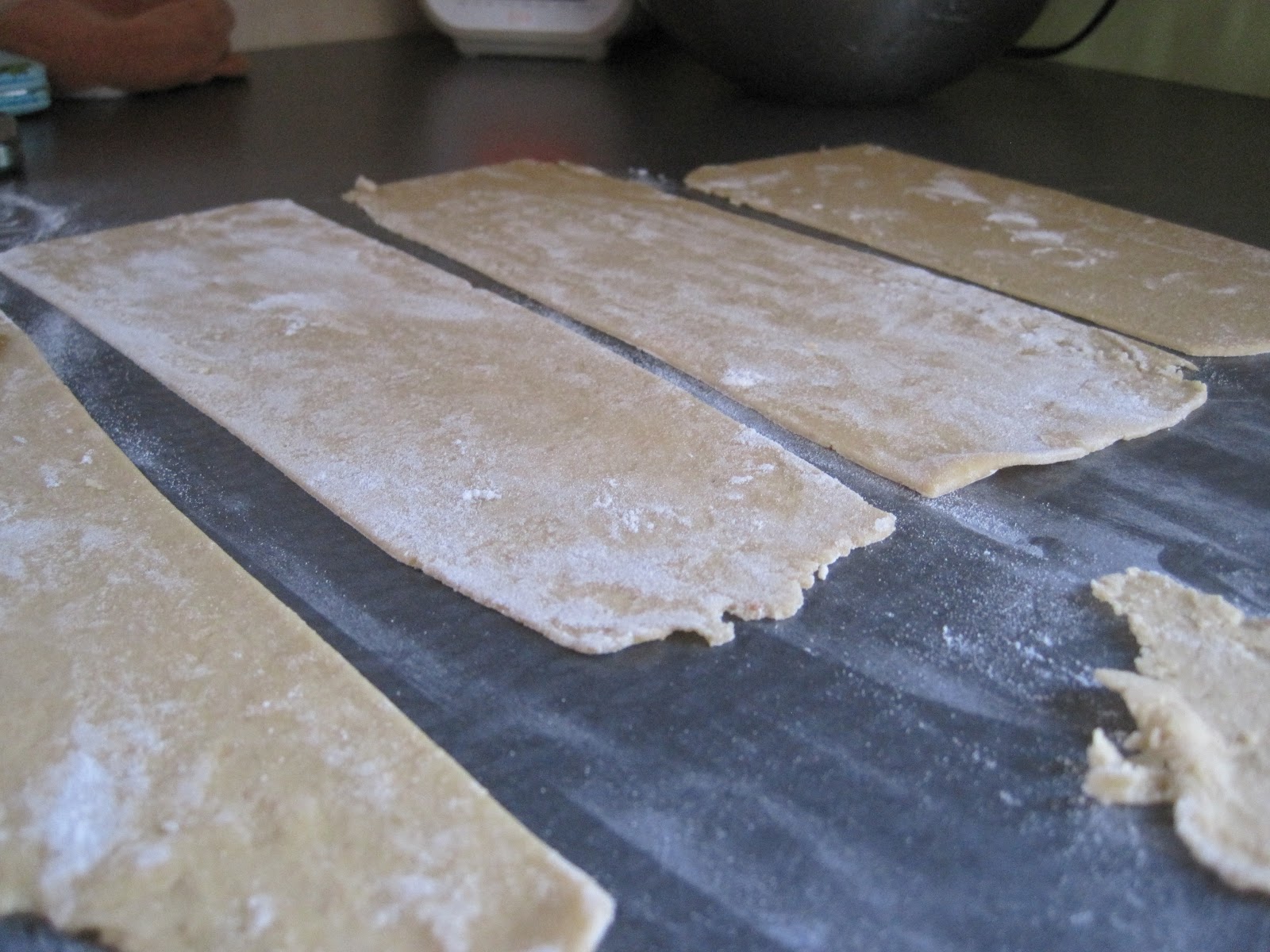
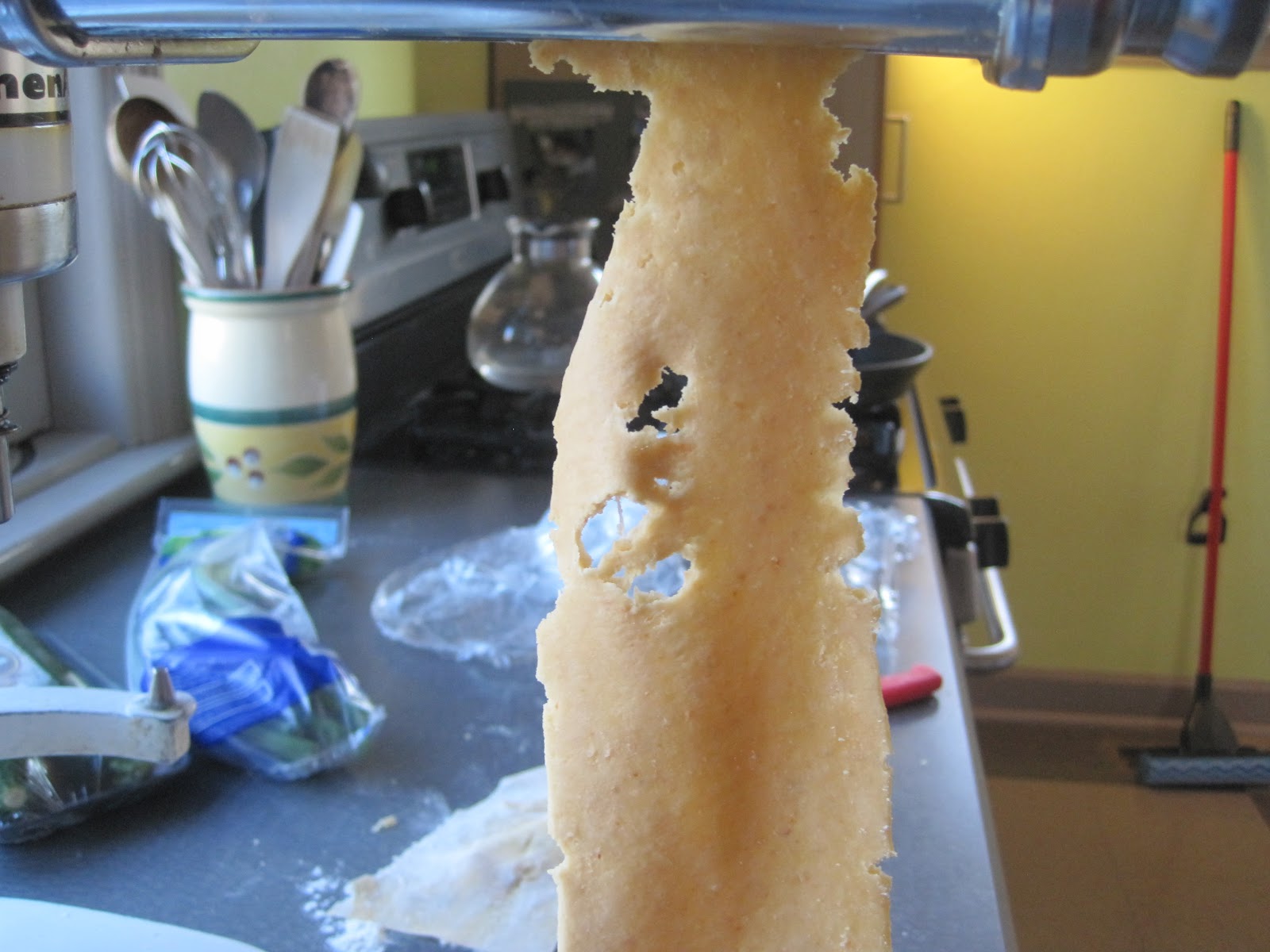
The lump of dough was broken into 4 pieces and I started sending it through rollers. Yup, much less gluten, lots of tearing, not much stretch. But I persisted and got to squish the dough down to a "4" setting, much thinner and it fell apart going through the rollers. Above is depicted the sheets. I let them dry out a bit before cutting into noodles, this keeps the noodles from sticking to each other.

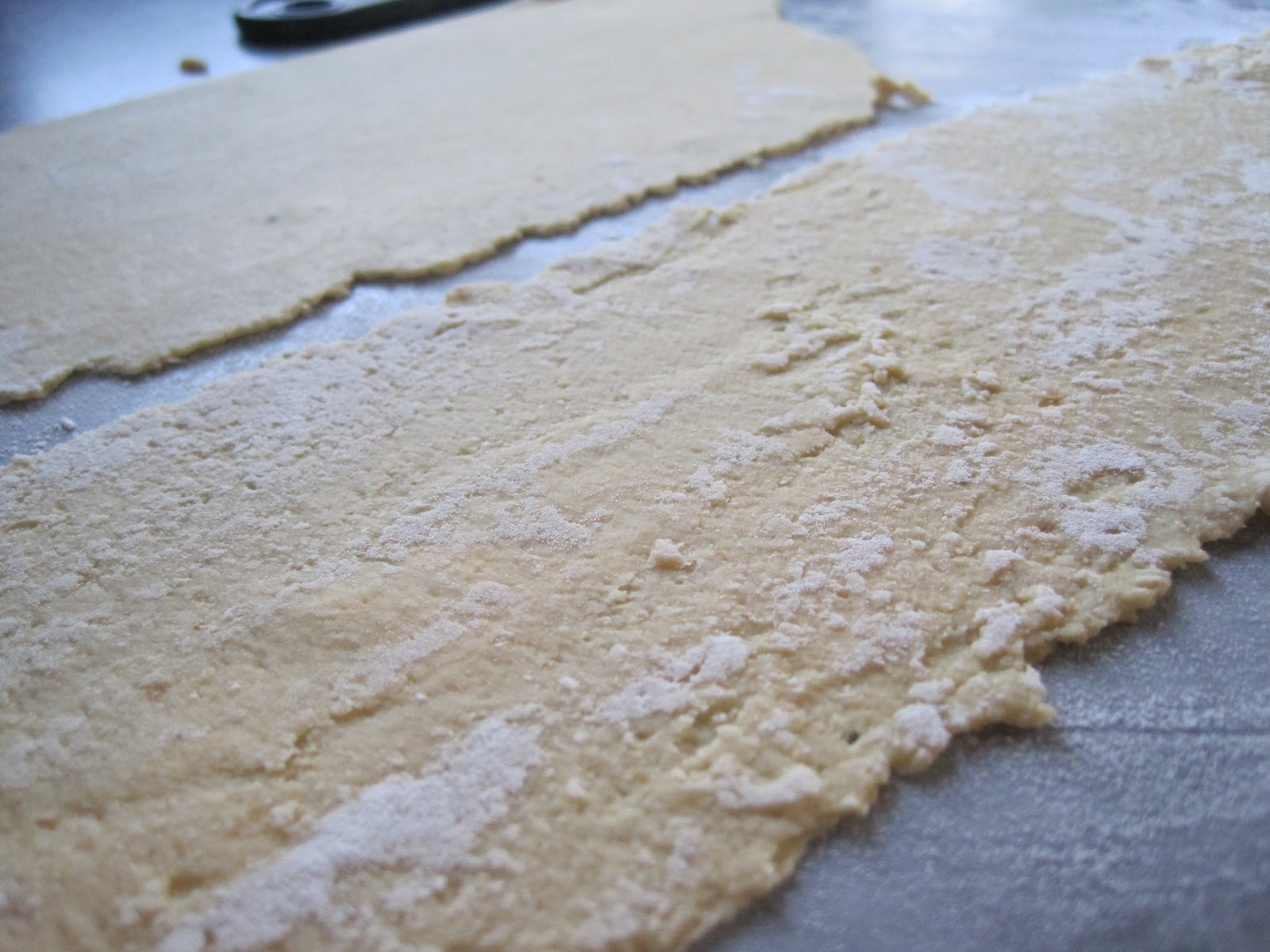
Here's a closer view of the surface of the dough after many passes through the rollers. With all flour, the dough becomes tough and smooth after this operation. In this case, the dough is always more fragile than with only flour (or flour and semolina).

Here's what happens sometimes after a pass through the rollers. This gets folded and rerolled and eventually it comes out acceptable.

After my sheets rested and dried out a little, I trimmed them using only a pizza cutter. I like the wide uneven noodles.

How were they?  They held up to boiling water just fine, they were tougher than I thought.  I boiled them like any other pasta, in salty water and served them with butter, oil and cheese.  They had an interesting flavor, very good I thought.  Tough noodle to get right.  Need a lot of patience and no way would I hand roll these things.  I think I'd make them again.

2.11.2012

What a fun market, La Plaza Tapatia


The other day @Hungry_Woolf tipped me off to an incredible piece on white bread.  Few topics interest me more than the baking methodology used for industrial strength pillow-soft white bread.  In that piece is mentioned "mejorante para pan blanco," or white bread improver.  Bethia pointed me to a well stocked market on Columbus' west side behind what is left of Westland Shopping Center, La Plaza Tapatia.  I went in and asked for this mejorante stuff, I had it written on an index card, but they didn't recognize the name, then I asked for baker's yeast and figured I'd find it nearby on the shelf.

This simple search for a product named yeast brought me back to Lyon, France 20 years ago, my first time out of the country on business.  Me and my little cue cards struggled to communicate the simplest of words.  Back to La Plaza, after 3 employees and finally a little kid hanging out by the meat counter, we realized the translation for yeast (levure) and I was set in the right direction.

I couldn't find the product, but I already hit a jackpot, I got to discover a community I never knew existed in my back yard.  While there, I got a bunch of beans including these killer spiced, roasted lima beans (reminded me of my expt with cannelini).

So, the hunt continues, thanks for the tip Bethia, it was a fun little adventure.

1.29.2012

An unconventional method for making biscuits results in puff pastry, and we're glad about that.

o

A big motivation for this site is from the question "what's the recipe?"  Few questions overwhelm me to point of being speechless.  A recipe is a list of ingredients, to put them together is a bigger proposition.  I used to go into the details, then I perceived the trapped person glazing over and I realized the person asking was simply trying to give a compliment but wasn't really interested in the preparation.  The website was an easy way to get off the hook.  I could point them to the site and details.

It's Sunday and that's often a morning of biscuits and fruit.  My typical biscuit prep is 300 g flour, 2 teaspoons baking powder, salt, a T sugar, cut in butter (100 g) and moisten with 180 grams liquid (water or milk), mix, fold a few times, cut in circles, bake at 450.

Today, since I was in croissant mode, I took a different tack with the same biscuit ingredients and stumbled on something nice.  I made a dough mixed from water (90 g), flour (150 g), salt (3 g), sugar (1T) and baking powder (2t) - which could just have easily been made from self rise flour (150 g) and water (90 g).  That was kneeded in a bread machine while I made a 55 gram butter pat in a small ziploc bag using my butter trick.  The dough and butter were treated just as in the croissant method (albeit much smaller rectangles, but still 81 layers) and cut into squares.

It was a lean dough, leavened with just baking powder.  Butter was then added, and the folding/chilling/rolling went off in about 15 minutes.  I cut the final dough into 6 cubes and baked at 450F.  The delectable morsels are depicted above.  They were reminiscent of puff pastry (obviously not as thin, but just as delicate) and are going to be a serious building block for all sorts of stuff, popovers for starters!